Bridge

Making real meaningful connection in transitional stages of life

Making real meaningful connection in transitional stages of life
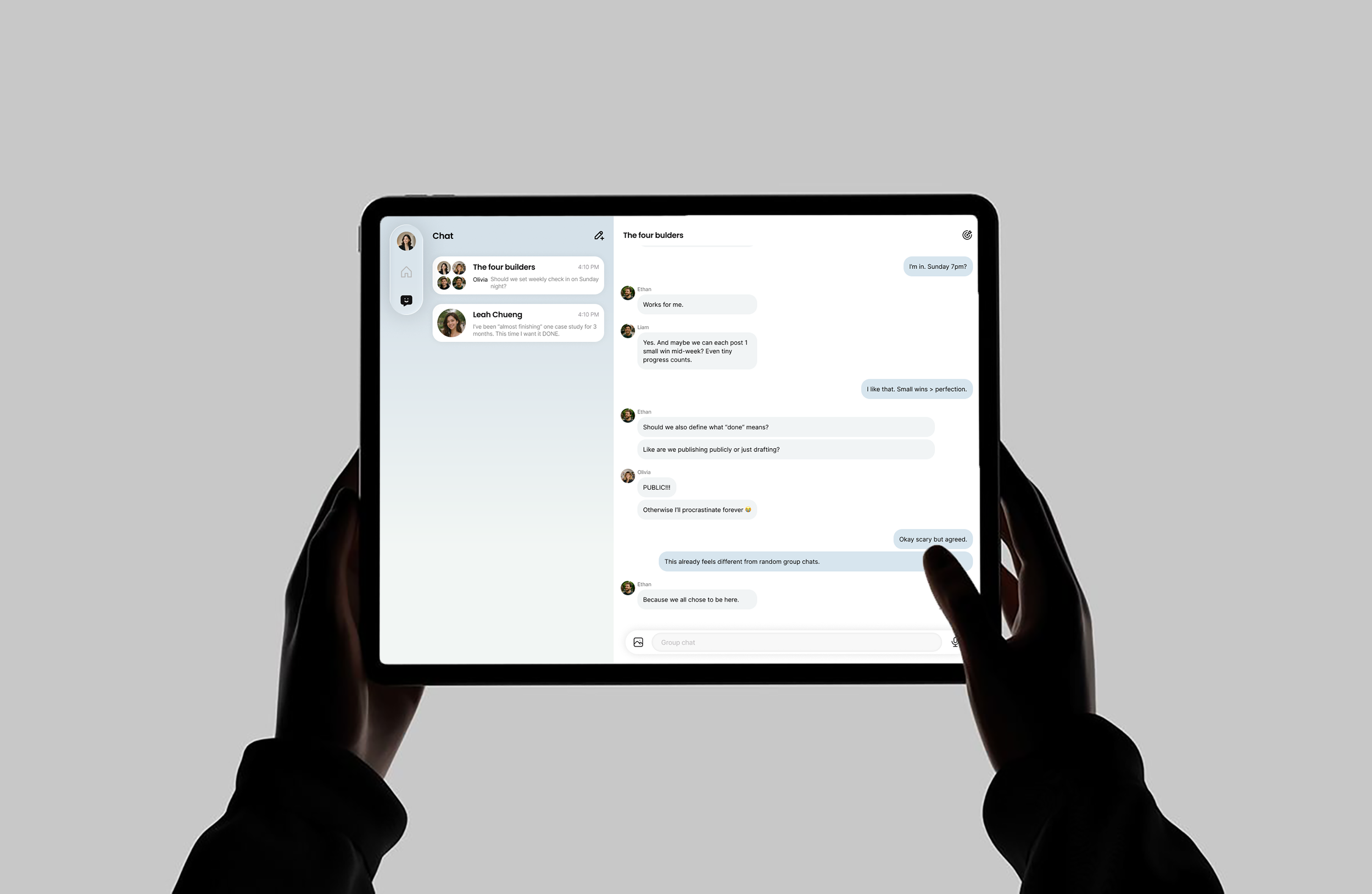
user journey

The loneliest people are often the ones who are “most connected”.

Bridge is a connection platform for people in transition (recent graduates, newcomers to a city, and career shifters) who want real friendships built around shared goals, not endless feeds.

Problem

Career transitions are when people most need support, but feel the least grounded in their social networks. Existing social platforms maximise engagement, not depth, leaving people with hundreds of “connections” but very few people they can actually lean on.

  • SOCIAL PLATFORM DRAWBACKS

    Infinite scroll and algorithmic feeds create passive, performative engagement rather than shared experiences.

    High usage is correlated with increased loneliness, especially among younger users.

    Engagement trap

    Performativity

    Mental load

  • WHAT PEOPLE ACTUALLY NEED

    A small group that cares about similar things.

    Real conversation, not performance.A shared purpose that they can work toward together.

    Friendship

    Real conversation

    Shared purpose

Research shows online communities can reduce isolation, but large generic networks often don’t lead to deep friendships. National Library of Medicine

"More active social media use = more loneliness"

Roberts et al., Public Health Post, 2025

“Niche communities and small, purposeful groups are more effective at creating support and engagement.”

Marjolijn L. Antheunis, Cyber Psychology,

Insights

3 key insights that shaped the product

  • Small groups, not big networks

    Research on social relationships suggests humans can maintain only a small circle of truly close ties; large, generic networks tend to dilute emotional closeness.

    Dunbar’s research, BBC, 2019

  • Transitions are the window

    Graduating, moving cities, and starting over are when people are most open to forming new friendships — and most vulnerable to isolation.

    Harvard Happiness Lab, 2025

  • Structure enables trust

    Structured community friendship groups reduce depression symptoms and increase perceived social support vs. unstructured groups.

    Frontiers in Psychology, 2023

This quadrant maps how people currently navigate connection during life transitions. Most existing tools sit in the lower quadrants: vague goals and low visibility. 

Quadant map

Product concept

Four goal tracksBridge focuses on people in transitional stages and orients connection around four types of goals:

  • Build

    Create something together

  • Grow

    Work on personal growth

  • Climb

    Advance careers

  • Passion

    Share interests

The “power of four”To avoid both the chaos of large groups and the intensity of 1:1 matching, Bridge uses small “power of four” groups:

  • Groups of four people with similar life stages and shared goals.
  • Big enough that the group still has energy when someone is busy.
  • Small enough that everyone is visible, heard, and accountable.

The Bridge Ecosystem

Bridge is designed as an ecosystem, not a single feature. Every touchpoint reinforces the same goal: move from strangers → collaborators → friends.

system

Onboarding

(goals + interests + perspective questions)

Matching

(user sees curated profiles → makes human selections → algorithm forms balanced pod of 4)

Bridge

(promote real connection, encourage meetups, task planers, space to share ideas)

End of cycle

(Choose to continue friendship OR join new group)

Long-term friendship

Key Design Decisions

3 key decisions that shaped the design

  • No public feed
    but a private group collection

    Public feeds create performance anxiety and popularity dynamics. A private collection turns the pod's shared history into a living archive of real conversations

  • Hybrid matchingHuman choice + algorithm

    Pure algorithm feels cold and opaque. Pure user-choice risks popularity bias and rejection dynamics. The hybrid gives users agency and a sense being human while the algorithm guarantees fairness, diversity of skills, and group balance.

  • 8 week timeframe
    Low-pressure commitment

    Each group runs for 8 weeks. This is framed not as a long-term commitment but as a low-pressure try: enough time for real connection to form, short enough that joining doesn't feel daunting.

AI-Accelerator Prototyping

Used Figma Make to generate initial screen layouts from text prompts, freeing time to focus on the ecosystem logic and emotional tone.

wireframe

Iteration

Real connection starts with mutual, intentional choice. The cycle then transforms the experience into something the group went through together to form real friendships.

  • Version 1 used a chain selection method with no end date. Groups formed by sequential luck and faded passively.

    Chain selection
    No end date cycle

    Start →

    Weeks.... →

    Group fade out

    Exit

    Move out side the app to meet in real world

  • Version 2 introduced hybrid matching, mutual choice from 10–15 profiles, balanced by algorithm. And an 8 weeks cycle with an intentional ending.

    Hybrid selection
    8 weeks cycle

    Start →

    Get to know →

    Doing things together →

    Reflect

    Exit

    End of cycle →

    Add to friends, join a new group, create group from friend list

Outcome/Reflection

Bridge is a project in designing against the grain. It required questioning every default of social app design, and building a system where the goal is to need the app less, not more.

demo
mink

Bridge

Making real meaningful connection in transitional stages of life

Making real meaningful connection in transitional stages of life
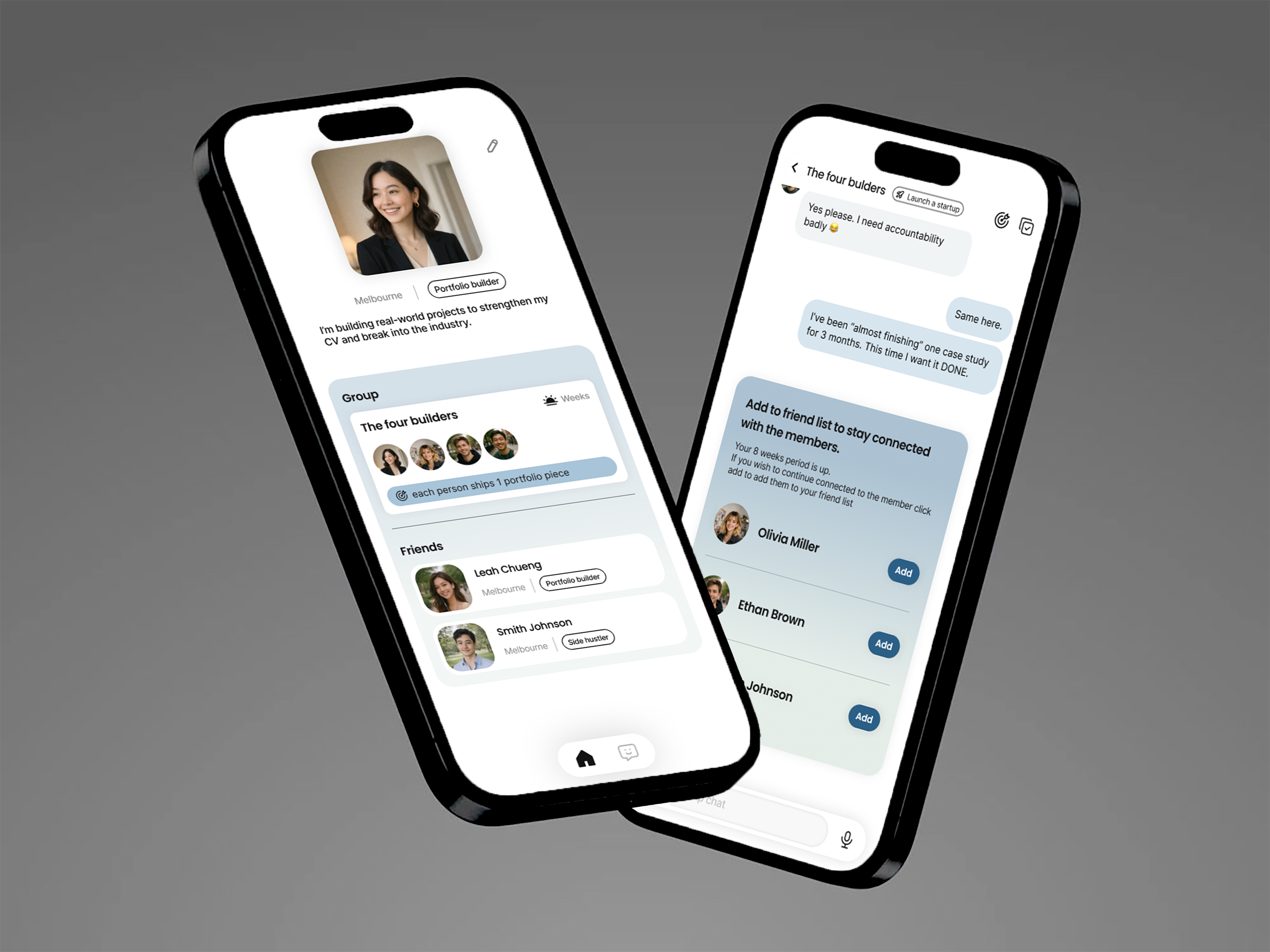
user journey

The loneliest people are often the ones who are “most connected”.

Bridge is a connection platform for people in transition (recent graduates, newcomers to a city, and career shifters) who want real friendships built around shared goals, not endless feeds.

Problem

Career transitions are when people most need support, but feel the least grounded in their social networks. Existing social platforms maximise engagement, not depth, leaving people with hundreds of “connections” but very few people they can actually lean on.

  • SOCIAL PLATFORM DRAWBACKS

    Infinite scroll and algorithmic feeds create passive, performative engagement rather than shared experiences.

    High usage is correlated with increased loneliness, especially among younger users.

    Engagement trap

    Performativity

    Mental load

  • WHAT PEOPLE ACTUALLY NEED

    A small group that cares about similar things.

    Real conversation, not performance.A shared purpose that they can work toward together.

    Friendship

    Real conversation

    Shared purpose
Research shows online communities can reduce isolation, but large generic networks often don’t lead to deep friendships. National Library of Medicine

"More active social media use = more loneliness"

Roberts et al., Public Health Post, 2025

“Niche communities and small, purposeful groups are more effective at creating support and engagement.”

Marjolijn L. Antheunis, Cyber Psychology,

Insights

3 key insights that shaped the product

  • Small groups, not big networks

    Research on social relationships suggests humans can maintain only a small circle of truly close ties; large, generic networks tend to dilute emotional closeness.

    Dunbar’s research, BBC, 2019

  • Transitions are the window

    Graduating, moving cities, and starting over are when people are most open to forming new friendships — and most vulnerable to isolation.

    Harvard Happiness Lab, 2025

  • Structure enables trust

    Structured community friendship groups reduce depression symptoms and increase perceived social support vs. unstructured groups.

    Frontiers in Psychology, 2023

This quadrant maps how people currently navigate connection during life transitions. Most existing tools sit in the lower quadrants: vague goals and low visibility. 

Quadant map

Product concept

Four goal tracksBridge focuses on people in transitional stages and orients connection around four types of goals:

  • Build

    Create something together

  • Grow

    Work on personal growth

  • Climb

    Advance careers

  • Passion

    Share interests

The “power of four”To avoid both the chaos of large groups and the intensity of 1:1 matching, Bridge uses small “power of four” groups:

  • Groups of four people with similar life stages and shared goals.
  • Big enough that the group still has energy when someone is busy.
  • Small enough that everyone is visible, heard, and accountable.

The Bridge Ecosystem

Bridge is designed as an ecosystem, not a single feature. Every touchpoint reinforces the same goal: move from strangers → collaborators → friends.

system

Onboarding

(goals + interests + perspective questions)

Matching

(user sees curated profiles → makes human selections → algorithm forms balanced pod of 4)

Bridge

(promote real connection, encourage meetups, task planers, space to share ideas)

End of cycle

(Choose to continue friendship OR join new group)

Long-term friendship

Key Design Decisions

3 key decisions that shaped the design

  • No public feed
    but a private group collection

    Public feeds create performance anxiety and popularity dynamics. A private collection turns the pod's shared history into a living archive of real conversations

  • Hybrid matchingHuman choice + algorithm

    Pure algorithm feels cold and opaque. Pure user-choice risks popularity bias and rejection dynamics. The hybrid gives users agency and a sense being human while the algorithm guarantees fairness, diversity of skills, and group balance.

  • 8 week timeframe
    Low-pressure commitment

    Each group runs for 8 weeks. This is framed not as a long-term commitment but as a low-pressure try: enough time for real connection to form, short enough that joining doesn't feel daunting.

AI-Accelerator Prototyping

Used Figma Make to generate initial screen layouts from text prompts, freeing time to focus on the ecosystem logic and emotional tone.

wireframe

Iteration

Real connection starts with mutual, intentional choice. The cycle then transforms the experience into something the group went through together to form real friendships.

  • Version 1 used a chain selection method with no end date. Groups formed by sequential luck and faded passively.

    Chain selection
    No end date cycle

    Start →

    Weeks.... →

    Group fade out

    Exit

    Move out side the app to meet in real world

  • Version 2 introduced hybrid matching, mutual choice from 10–15 profiles, balanced by algorithm. And an 8 weeks cycle with an intentional ending.

    Hybrid selection
    8 weeks cycle

    Start →

    Get to know →

    Doing things together →

    Reflect

    Exit

    End of cycle →

    Add to friends, join a new group, create group from friend list

Outcome/Reflection

Bridge is a project in designing against the grain. It required questioning every default of social app design, and building a system where the goal is to need the app less, not more.

demo
mink

Bridge

Making real, meaningful connection in transitional stages of life

Role: UX/UI Designer (end‑to‑end research, flows, and prototypes)

user journey

The loneliest people are often the ones who are “most connected”.

Bridge is a connection platform for people in transition (recent graduates, newcomers to a city, and career shifters) who want real friendships built around shared goals, not endless feeds.

Problem

Career transitions are when people most need support, but feel the least grounded in their social networks. Existing social platforms maximise engagement, not depth, leaving people with hundreds of “connections” but very few people they can actually lean on.

  • SOCIAL PLATFORM DRAWBACKS

    Infinite scroll and algorithmic feeds create passive, performative engagement rather than shared experiences.

    High usage is correlated with increased loneliness, especially among younger users.

    Engagement trap

    Performativity

    Mental load

  • WHAT PEOPLE ACTUALLY NEED

    A small group that cares about similar things.

    Real conversation, not performance.A shared purpose that they can work toward together.

    Friendship

    Real conversation

    Shared purpose
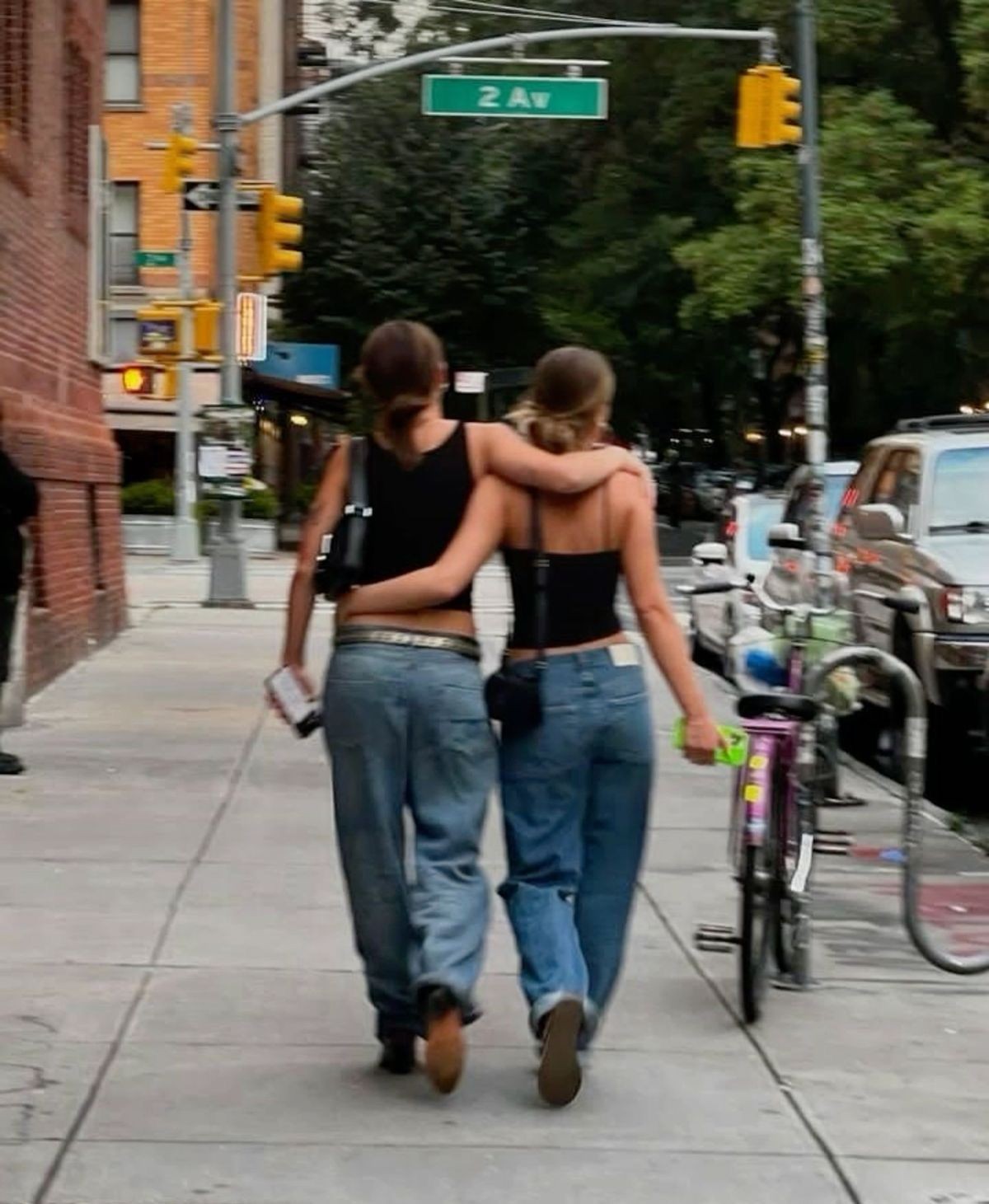
Research shows online communities can reduce isolation, but large generic networks often don’t lead to deep friendships. National Library of Medicine

"More active social media use = more loneliness"

Roberts et al., Public Health Post, 2025

“Niche communities and small, purposeful groups are more effective at creating support and engagement.”

Marjolijn L. Antheunis, Cyber Psychology,

Insights

3 key insights that shaped the product

  • Small groups, not big networks

    Research on social relationships suggests humans can maintain only a small circle of truly close ties; large, generic networks tend to dilute emotional closeness.

    Dunbar’s research, BBC, 2019

  • Transitions are the window

    Graduating, moving cities, and starting over are when people are most open to forming new friendships — and most vulnerable to isolation.

    Harvard Happiness Lab, 2025

  • Structure enables trust

    Structured community friendship groups reduce depression symptoms and increase perceived social support vs. unstructured groups.

    Frontiers in Psychology, 2023
This quadrant maps how people currently navigate connection during life transitions. Most existing tools sit in the lower quadrants: vague goals and low visibility. 
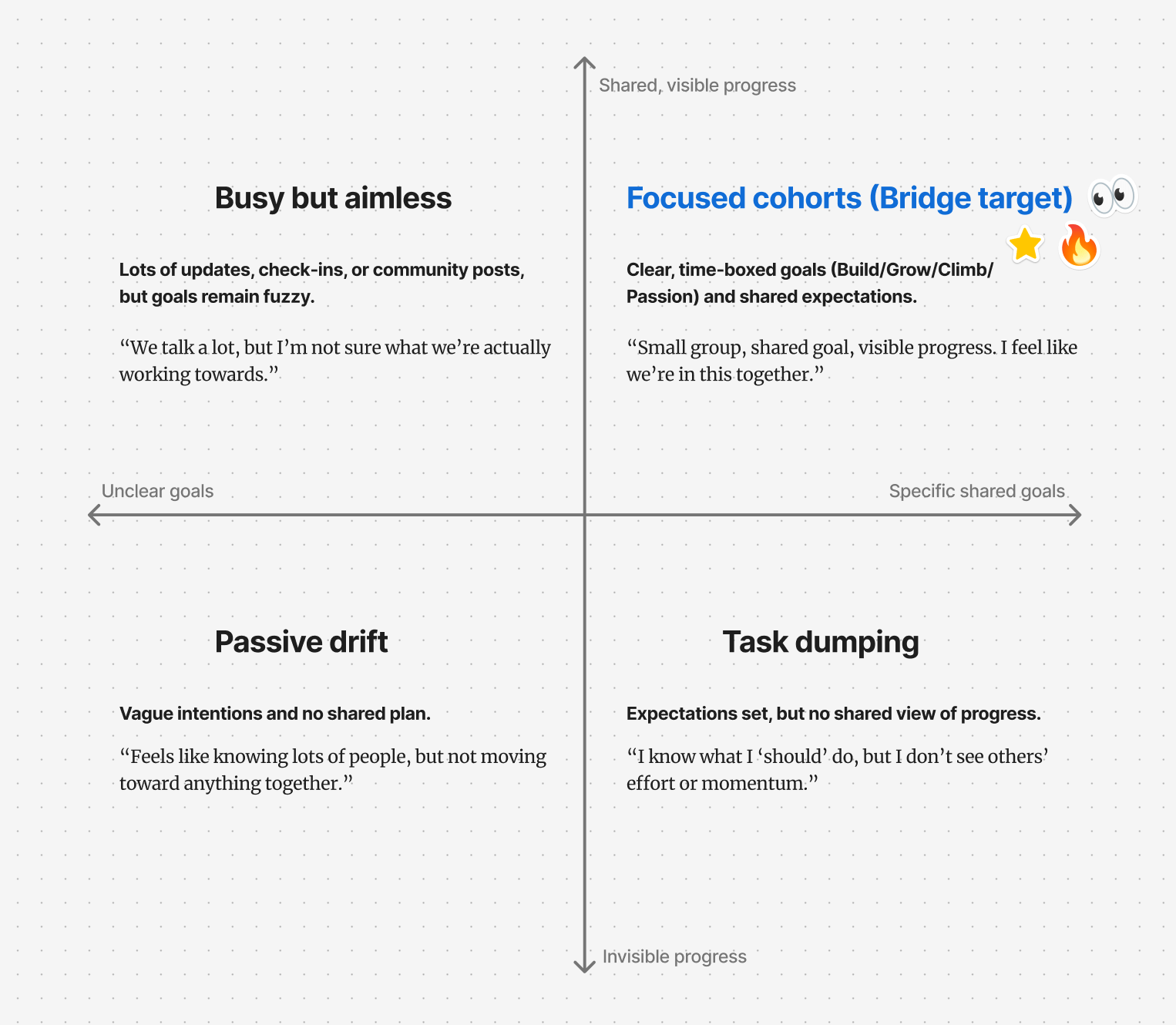
Quadant map

Product concept

Four goal tracksBridge focuses on people in transitional stages and orients connection around four types of goals:

  • Build

    Create something together

  • Grow

    Work on personal growth

  • Climb

    Advance careers

  • Passion

    Share interests

The “power of four”To avoid both the chaos of large groups and the intensity of 1:1 matching, Bridge uses small “power of four” groups:

  • Groups of four people with similar life stages and shared goals.
  • Big enough that the group still has energy when someone is busy.
  • Small enough that everyone is visible, heard, and accountable.

The Bridge Ecosystem

Bridge is designed as an ecosystem, not a single feature. Every touchpoint reinforces the same goal: move from strangers → collaborators → friends.
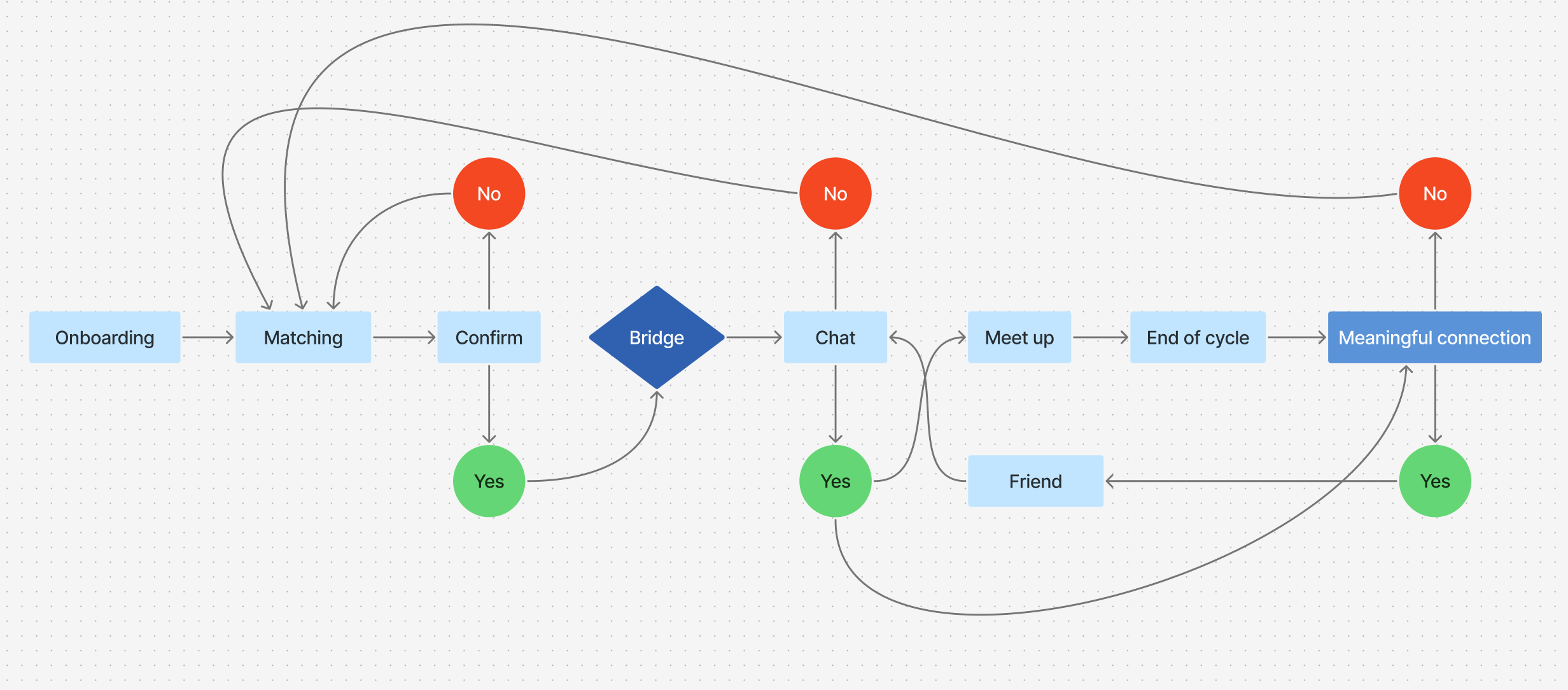
system

Onboarding

(goals + interests + perspective questions)

Matching

(user sees curated profiles → makes human selections → algorithm forms balanced pod of 4)

Bridge

(promote real connection, encourage meetups, task planers, space to share ideas)

End of cycle

(Choose to continue friendship OR join new group)

Long-term friendship

Key Design Decisions

3 key decisions that shaped the design

  • No public feed
    but a private group collection

    Public feeds create performance anxiety and popularity dynamics. A private collection turns the pod's shared history into a living archive of real conversations

  • Hybrid matchingHuman choice + algorithm

    Pure algorithm feels cold and opaque. Pure user-choice risks popularity bias and rejection dynamics. The hybrid gives users agency and a sense being human while the algorithm guarantees fairness, diversity of skills, and group balance.

  • 8 week timeframe
    Low-pressure commitment

    Each group runs for 8 weeks. This is framed not as a long-term commitment but as a low-pressure try: enough time for real connection to form, short enough that joining doesn't feel daunting.

AI-Accelerator Prototyping

Used Figma Make to generate initial screen layouts from text prompts, freeing time to focus on the ecosystem logic and emotional tone.
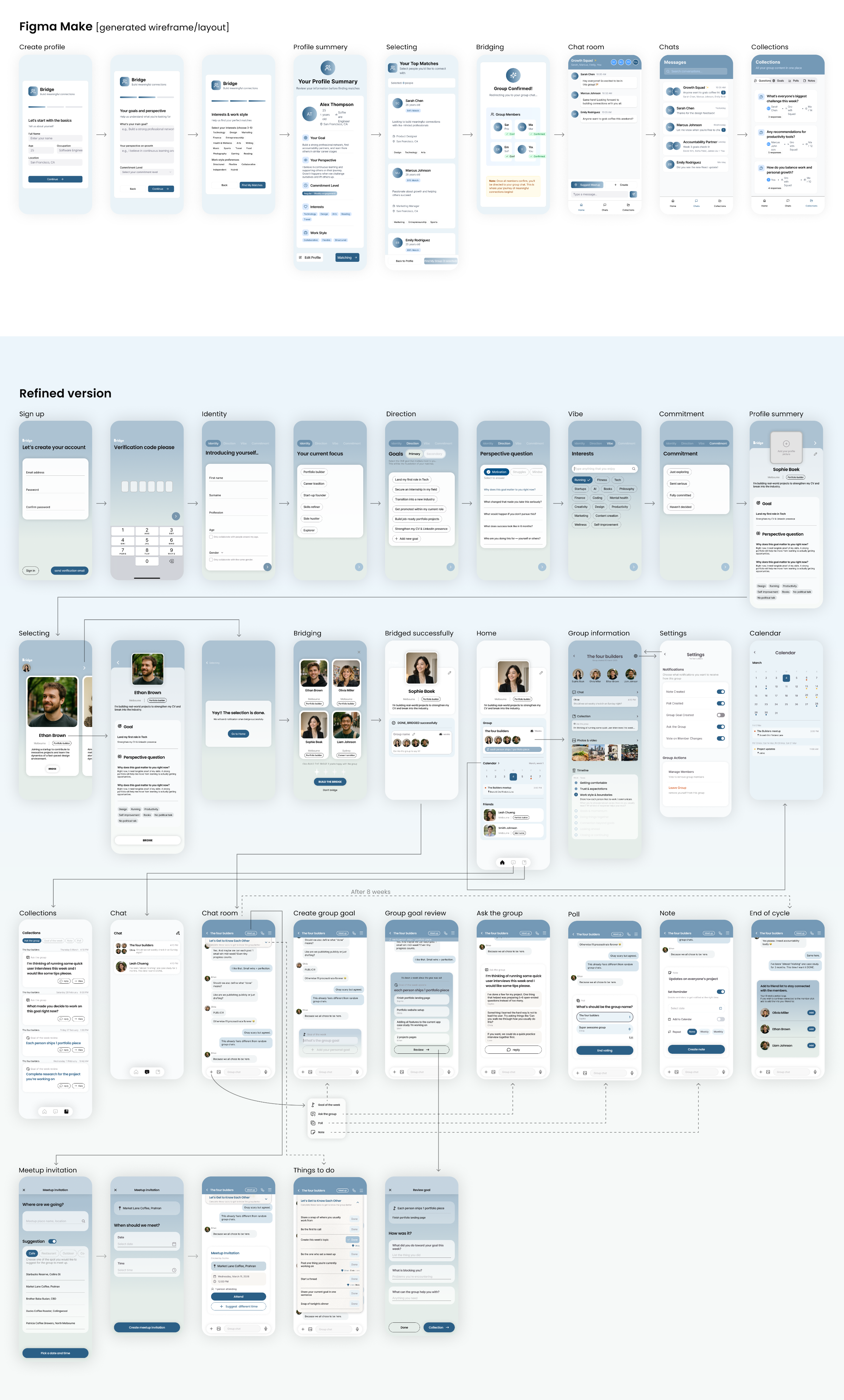
wireframe

Iteration

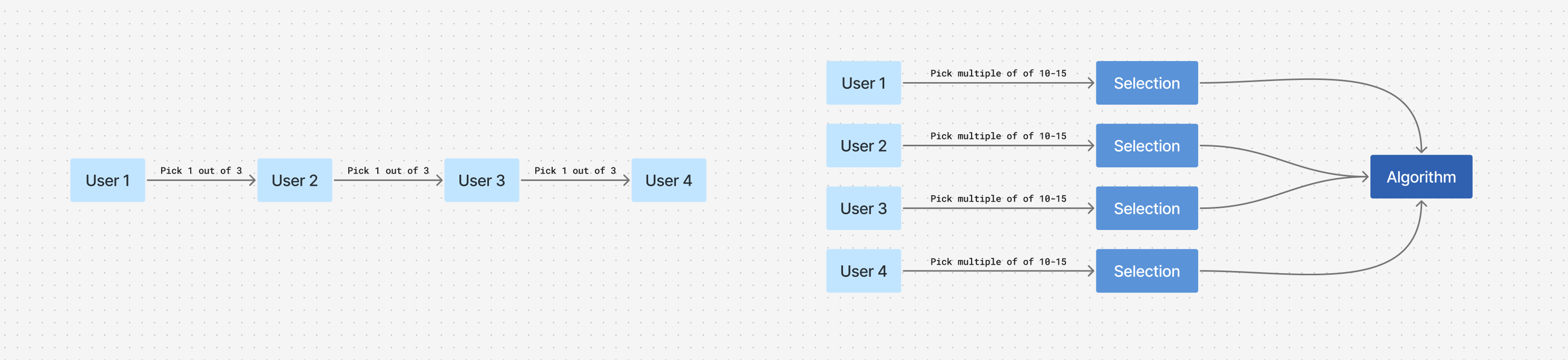
Real connection starts with mutual, intentional choice. The cycle then transforms the experience into something the group went through together to form real friendships.

  • Version 1 used a chain selection method with no end date. Groups formed by sequential luck and faded passively.

    Chain selection
    No end date cycle

    Start →

    Weeks.... →

    Group fade out

    Exit

    Move out side the app to meet in real world

  • Version 2 introduced hybrid matching, mutual choice from 10–15 profiles, balanced by algorithm. And an 8 weeks cycle with an intentional ending.

    Hybrid selection
    8 weeks cycle

    Start →

    Get to know →

    Doing things together →

    Reflect

    Exit

    End of cycle →

    Add to friends, join a new group, create group from friend list
Outcome/Reflection

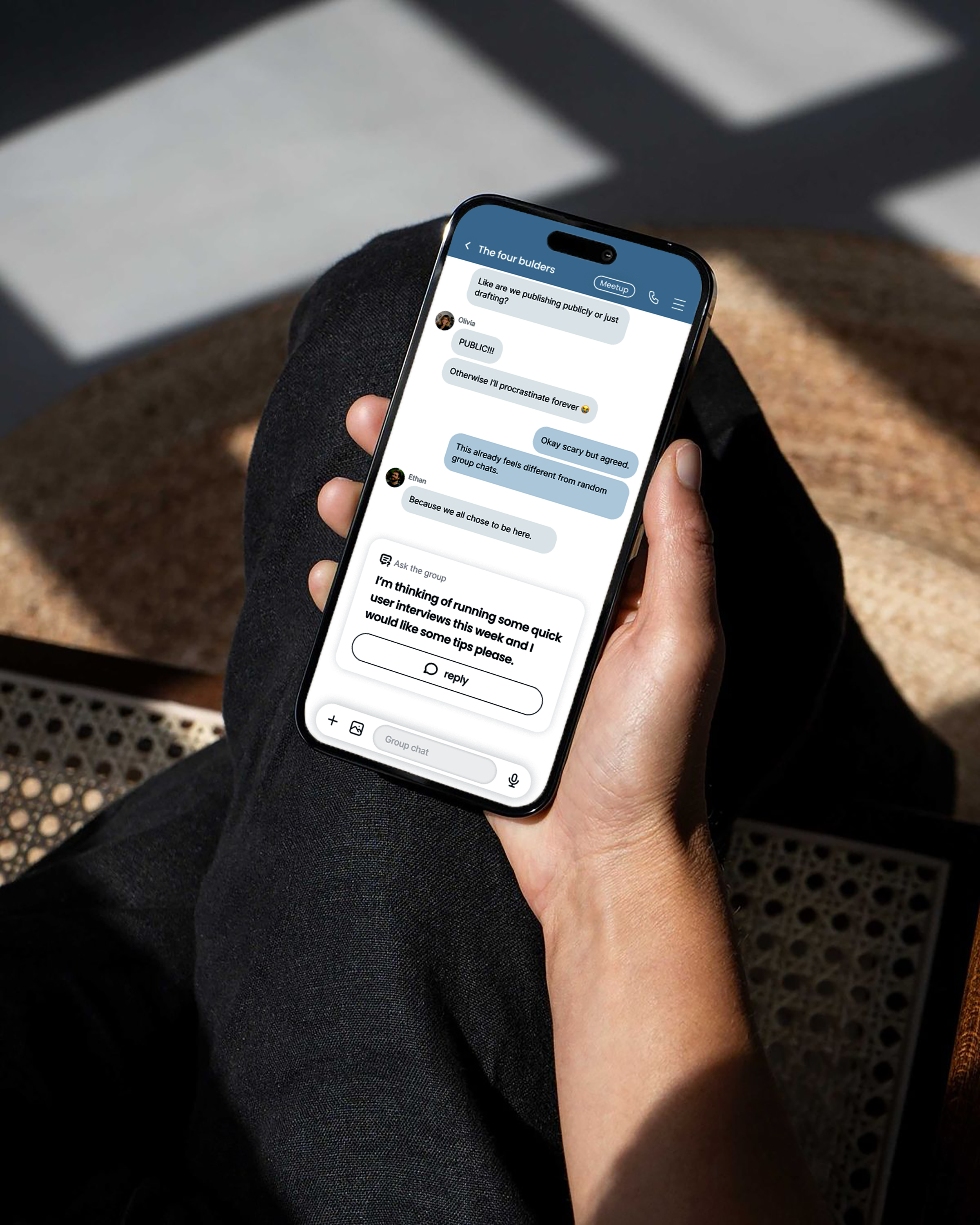
Bridge is a project in designing against the grain. It required questioning every default of social app design, and building a system where the goal is to need the app less, not more.

outcome
mink